Last summer Amy brought home a big loaf of sourdough from the Burlington Farmers Market and gushed about the friendly baker behind the bread - Max Koestenblatt of Max & Co Bakehouse. When she’s vending for V Smiley Preserves at the farmers market, Amy can be almost focused to a fault (the girl doesn’t leave that stand) so I was excited she’d connected with another vendor because it’s one of the big perks and joys of being a market seller. Max’s bread is beautiful and he wholesales to shops and farmstands around Chittenden County here in Vermont. He maintains a bustling wholesale focaccia business as well and a cult following grew for his rotating flavors.
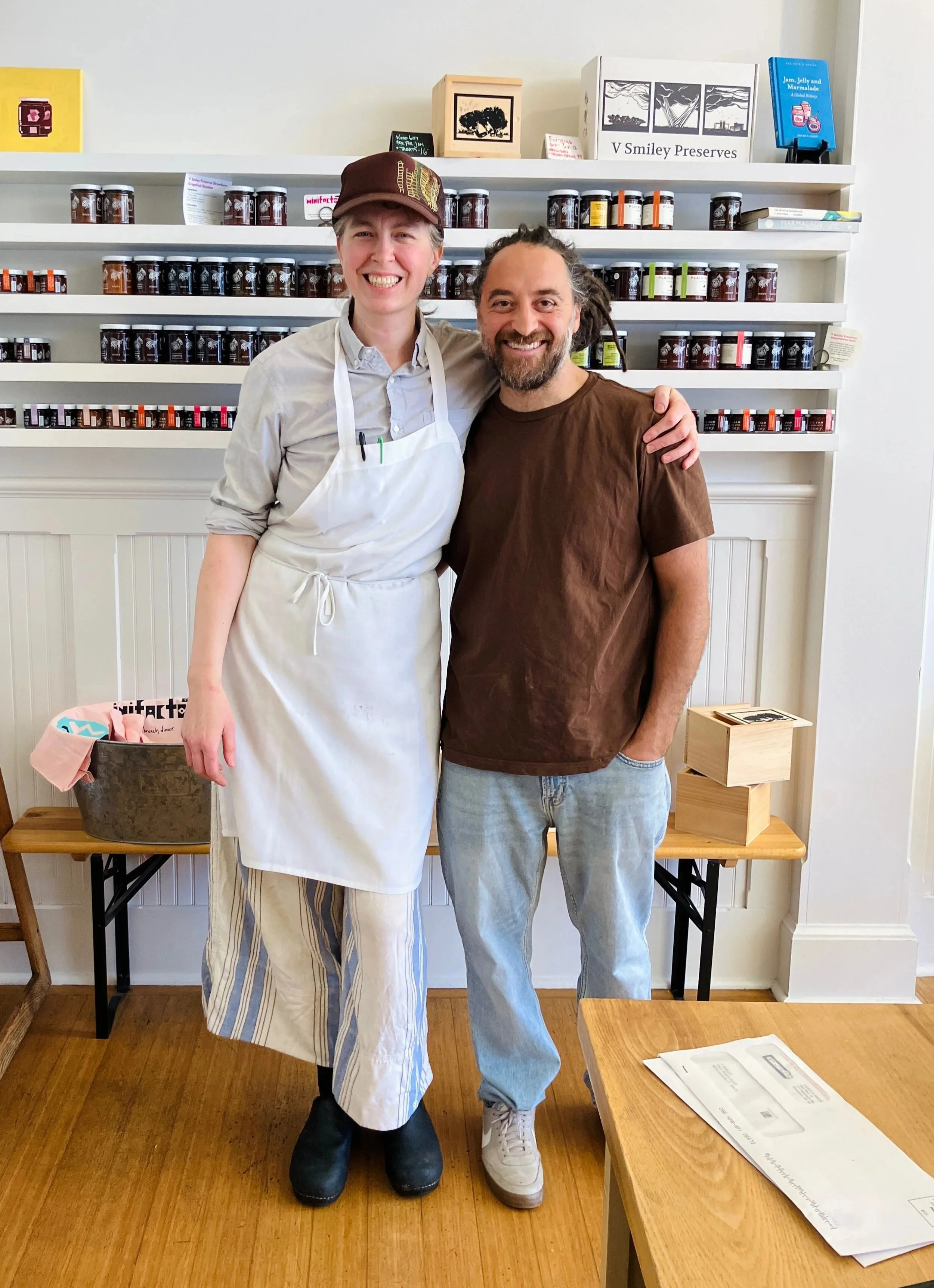
I love to recommend using V Smiley Preserves to focaccia bakers for its ability to bring acidity and complement the spoonfuls of goat cheeses, slices of cured meat or perfectly roasty toasty veggies marking the divots and bubbles of the flatbread. As we round the corner on outdoor farmers market season here in VT, Max and I partnered up using his beautiful focaccia to feature two autumnal V Smiley Preserves flavors. If you are local, follow us on IG to go out and find some of this goodness. If you are a little further afield, Max and I also sat down and talked about his work as a baker and how he’s thinking about the revolution in grain growing, selling, milling and baking that’s happening across the states.
V Smiley Preserves: What’s it like having a home-based bakery and being a solo operation?
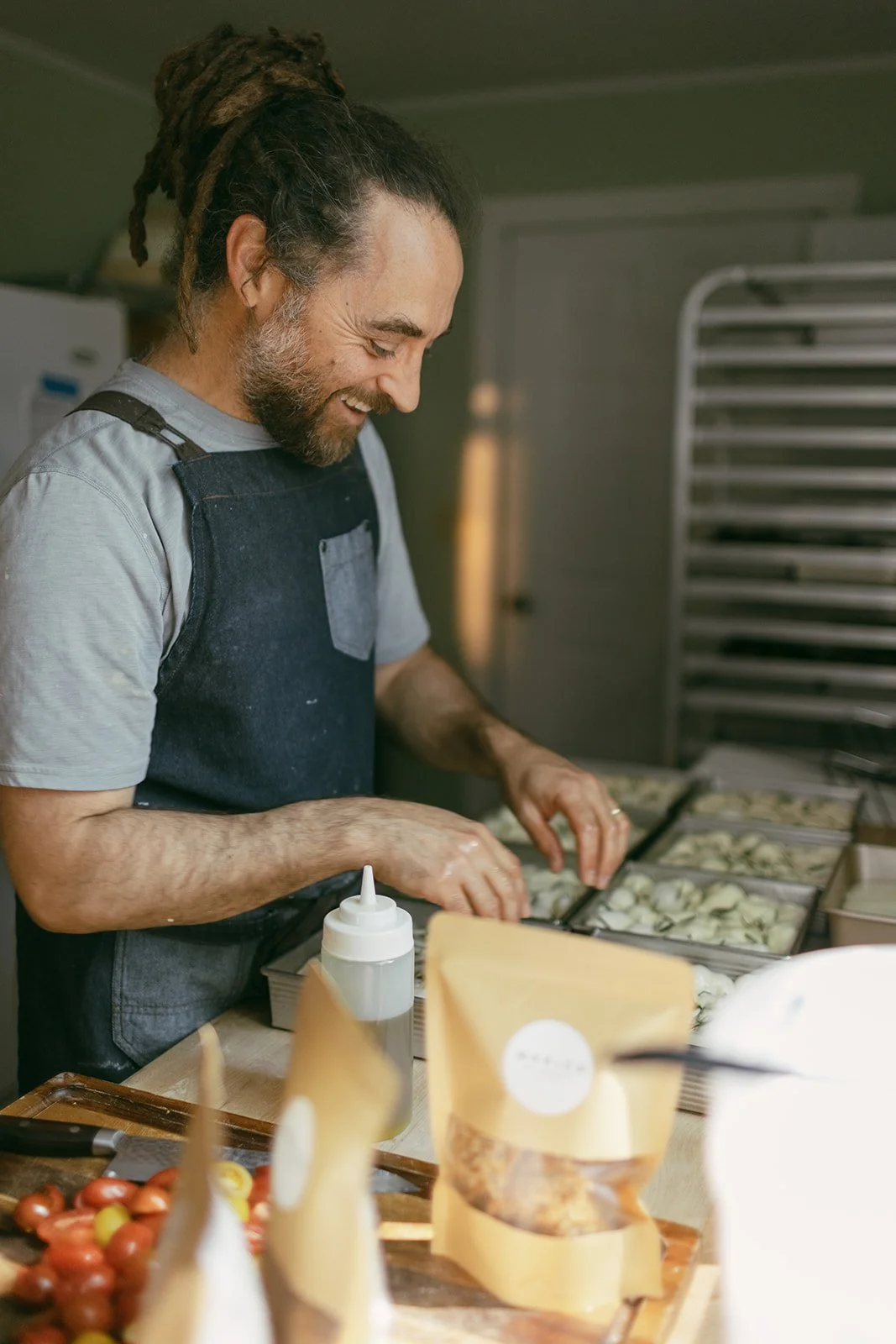
Max Koestenblatt: There are so many benefits to keeping my bakery at home, at least for now. Being a dad to three kiddos under five (including 2.5-year-old twins), having a home bakery allows me to pop in and out to help get them off to daycare and be around while dough is proofing. While there is a lot of hands-on time involved in running a bakery, there are also moments where I can step away and check a few things off the never-ending to-do list.
Recently, there have been conversations about expanding - the home bakery continues to come out on top. For this stage of my life, it gives me the flexibility to balance being a baker and being a dad.
As for being a solo baker — it’s a lot. One of the best parts is that I have complete control over every aspect of what I’m doing, but the flip side is that I’m also the only person responsible for every task. I love the quiet time I get in the bakery, but I’m also in my own head a lot. There’s no one standing next to me to bounce ideas off of, ask whether they think the dough is ready, or troubleshoot with.
Luckily, I have a wonderful helper who takes on a lot of the behind-the-scenes work — deliveries, picking up supplies, labeling bags, and all the other time-consuming tasks that keep things moving. Having that support allows me to spend more of my time doing what I love most: making bread.
VSP: Bread is such a craft, what drew you to it and has your technique developed over time?
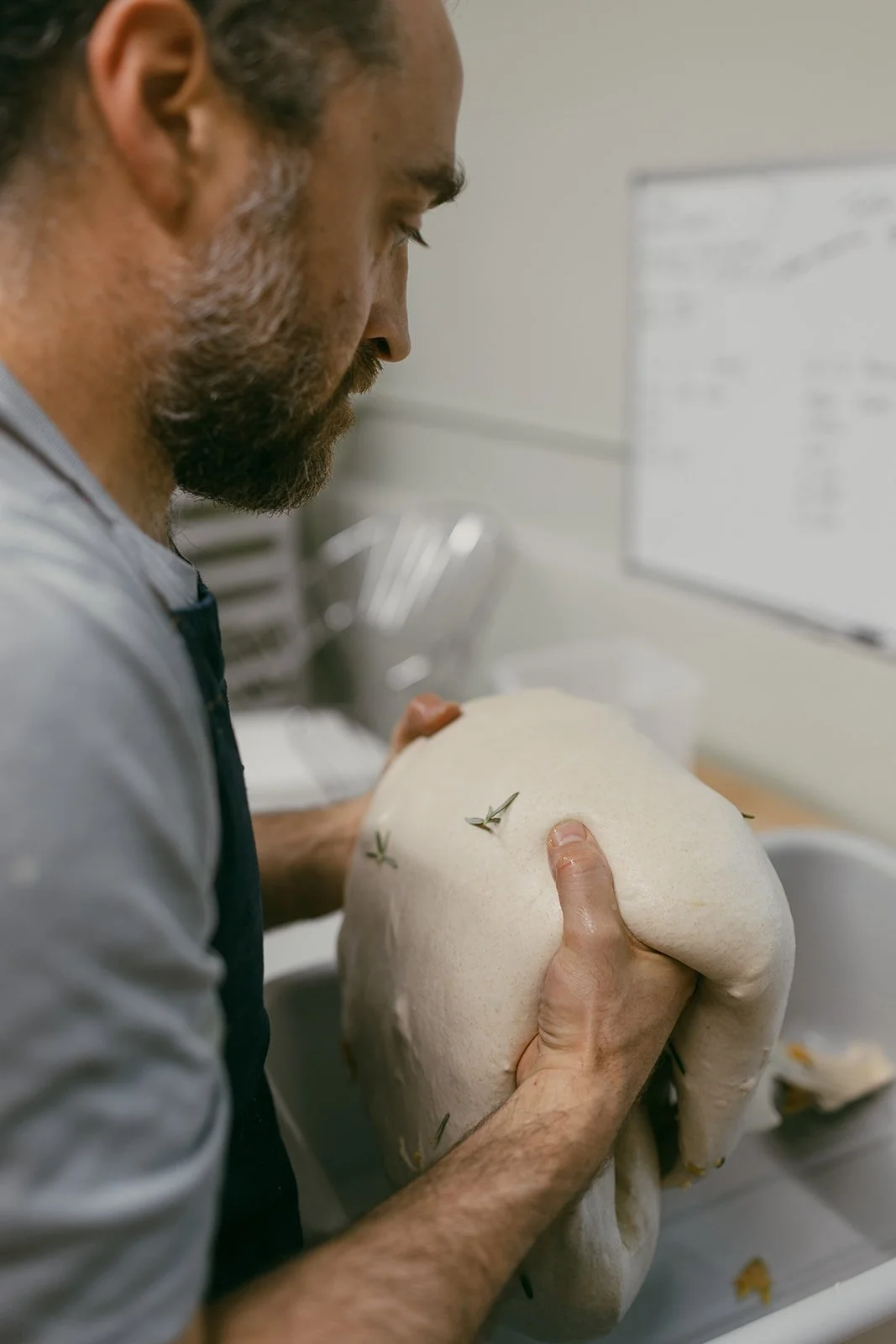
MK: Bread is one of those things that I don’t think you can ever fully master. I’m constantly learning, experimenting, and adjusting. The dough is always changing, and as a baker, you have to adapt your techniques based on your environment.
Here in Vermont, my bakery is very much affected by the seasons. It can be extremely hot in the summer and quite cool in the winter since my space is located off my garage. Because of that, the dough is always changing, and I’m constantly making adjustments. Something I did a few weeks ago that worked perfectly might not work the same way today. That can be frustrating at times, but it’s also what keeps me engaged and excited.
One of the things that originally drew me to bread was the opportunity to work with my hands every day and create something connected to the earth and the farmers who grow the ingredients. There’s something incredibly special about making a product that starts with local grain and ends up on someone’s table.
I am completely self-taught, and that idea of always having something new to learn is what keeps me loving this craft. There is always another technique to explore, another variable to understand, and another way to improve.
VSP: What’s your vision of the ideal marketplace for bread in the Champlain Valley?
MK: I think the ideal bread marketplace in the Champlain Valley is one where there is room for everyone. Bread is such a personal thing and there are so many different ways to approach it — from a small home bakery like mine, to larger bakeries with storefronts, to farms growing and milling their own grain. I don’t think there needs to be one “right” way to make bread. The more people we have caring about quality ingredients, traditional methods, and supporting local agriculture, the better it is for everyone.
I would love to see bread become something that people seek out in their everyday lives, not just something reserved for a special occasion. Having more places to find thoughtfully made bread — farmers markets, farm stands, local stores, bakeries, and community spaces — creates more connection between bakers, farmers, and customers.
I also think there is a lot of opportunity for collaboration within the bread community. We all bring something different to the table, and I think a diverse group of producers only makes the local bread scene stronger.
VSP: There’s a movement around grain nationwide. How has your sourcing developed over time?
MK: My relationship with grain has probably been one of the biggest areas of growth for me as a baker. When I first started making bread, I was focused on the process — fermentation, shaping, baking, and understanding how all the pieces worked together. Over time, I started realizing that the grain itself is just as important as the technique.
Bread starts long before it reaches the bakery. It starts with the farmer planting the seed, caring for the crop, harvesting it, and the miller turning it into something we can work with.
Every harvest is different. The flour changes from year to year, and that means the dough changes too. It forces me to pay attention and work with what I have rather than trying to force the dough to behave a certain way. I love that relationship — it’s a conversation between the farmer, the grain, the environment, and the baker.
Supporting local grain systems also feels important because it keeps more of our food economy close to home. Being able to make bread that reflects where we live in Vermont is something I’m really proud of.
VSP: Are there any differences between your focaccia and your breads in regards to the grain? How is the process different?
MK: I work with a handful of different organic and regional flours, most of which I source through Red Hen Baking. My flour choices have changed over time.
The foundation of my classic sourdough loaves (and all of my flavored sourdoughs) is Farmers Ground regeneratively grown high-extraction flour (T85). Their flour is a blend of hard red winter and hard red spring wheat and has around 12% protein. Farmers Ground is located in Trumansburg, New York, and they mill their flour on granite stone mills. This process removes the largest pieces of bran while still retaining much of the wheat germ and bran, giving the flour its characteristic tan color.
What I love about this flour is that it offers the best of both worlds. By retaining more of the grain, it brings the deep, nutty flavor and nutritional benefits you associate with whole wheat, but it still performs much more like a traditional white bread flour. That balance makes it ideal for creating the kind of artisan sourdough loaves I enjoy making.
I blend that base flour with freshly milled whole wheat from Elysian Fields in Shoreham, Vermont. Their grain is milled by Red Hen Baking in their stone mill the day before I pick it up, which is pretty special. Freshly milled flour adds another layer of flavor and nutrition to the bread and really highlights the connection between the farmer, the miller, and the baker.
I also incorporate all-purpose flour from Moulin De Cèdres in Quebec, which uses a roller mill to create a consistent, lighter white flour. This gives the dough some balance by adding consistency, flavor and a lighter texture.
The exact blend continues to evolve because that’s one of the things I love about working with grain. Flour is not a static ingredient — it changes with the harvest, the season, and the way it’s milled.
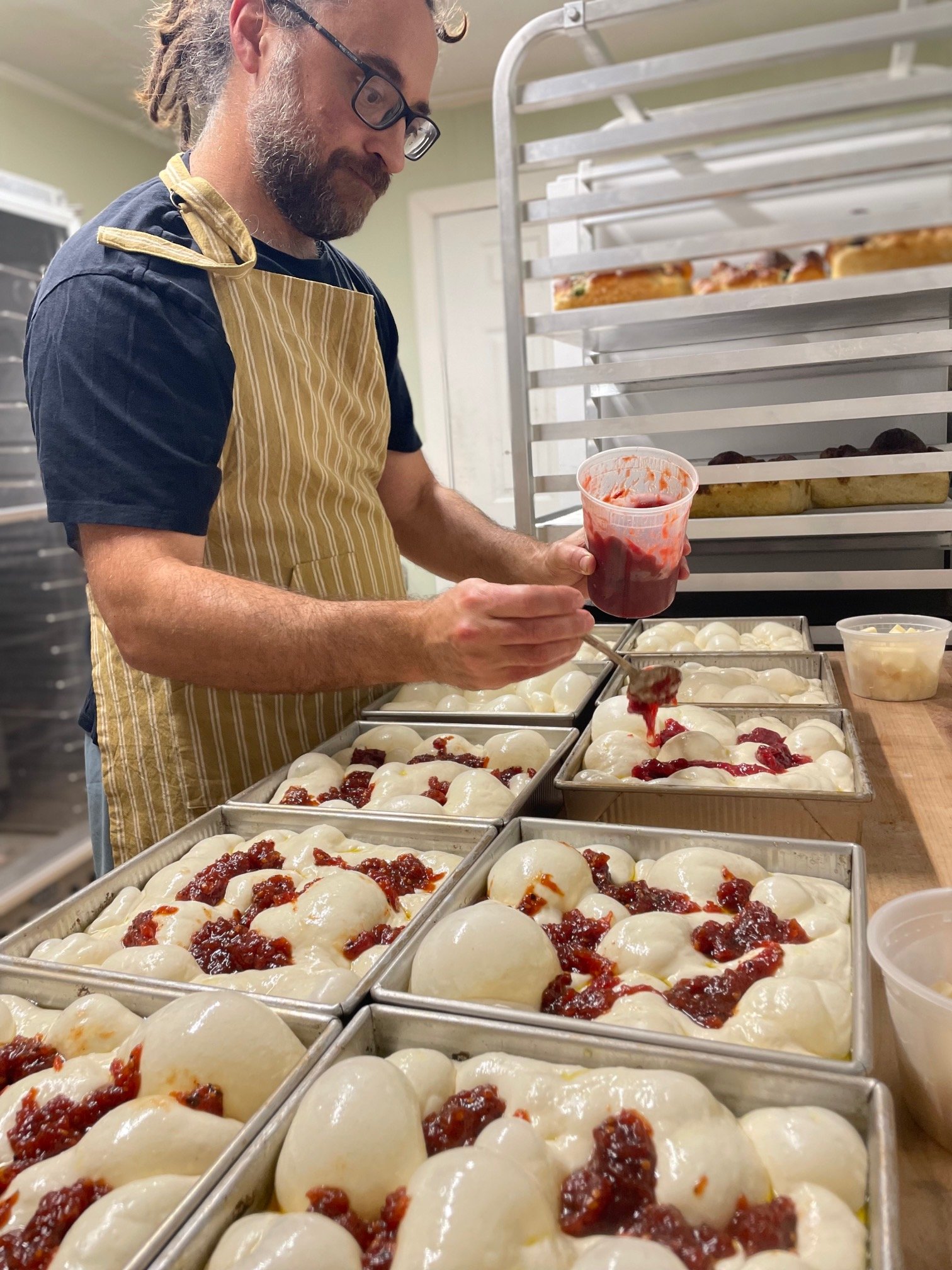
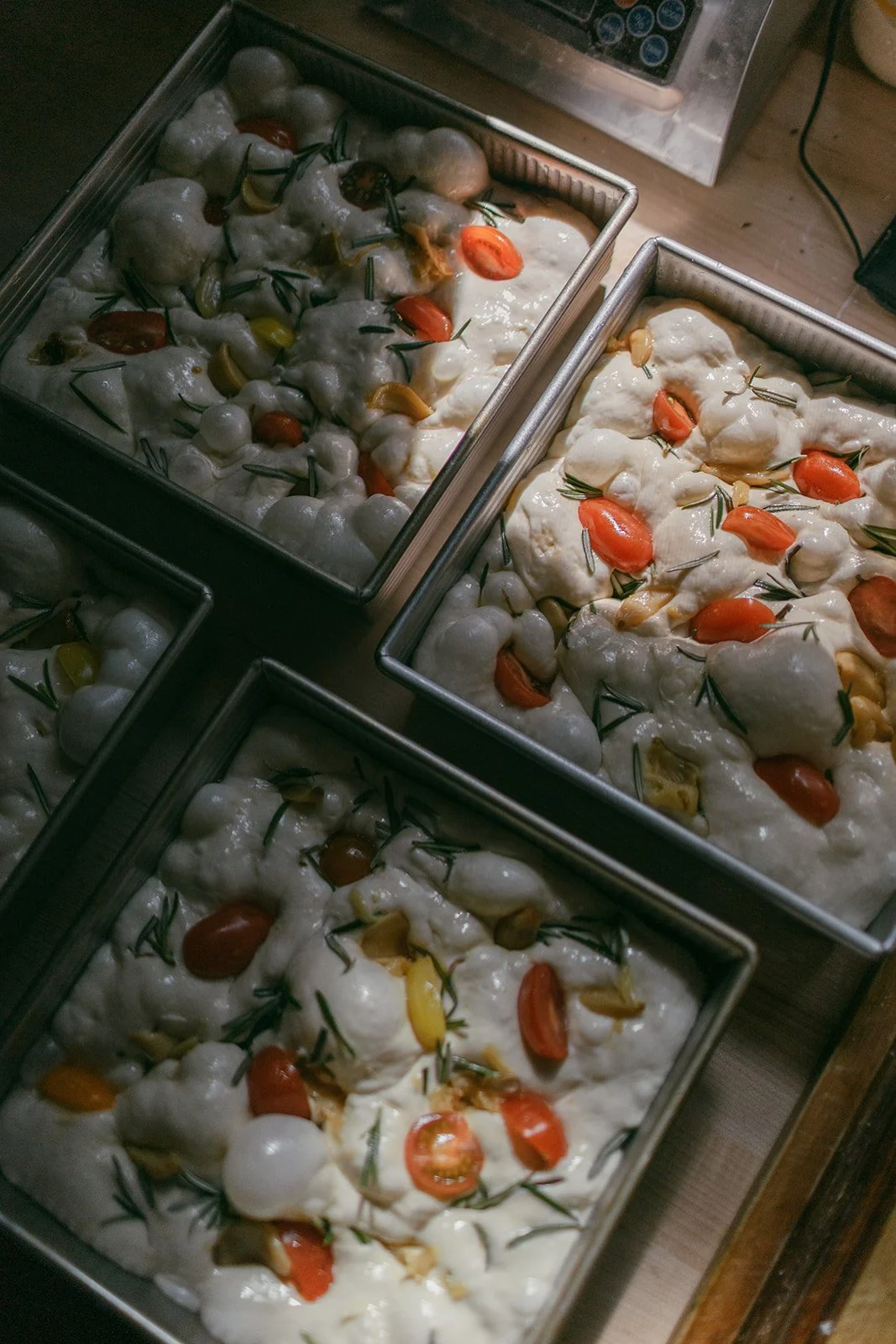
My focaccia is a little different from my classic sourdough loaves, both in the flour I use and in the way the dough is made. Since focaccia is an enriched dough with honey and extra virgin olive oil, I use a blend of Moulin De Cèdres all-purpose flour and King Arthur Organic bread flour.
I have thought many times about replacing the King Arthur flour with the Farmers Ground high-extraction flour that I use in my sourdough loaves. I love that flour and what it brings to the bread, but it would also change the flavor, color, and overall character of the focaccia. When customers tell you it’s the best focaccia they’ve ever had, it makes you think twice about changing something that already feels special. Sometimes part of being a baker is knowing when to keep experimenting and when to respect what is already working.
Focaccia came into my baking journey as a way to use up sourdough starter. And honestly, who doesn’t love a bread that has a crispy exterior and a soft, fluffy interior? It’s a pretty irresistible combination.
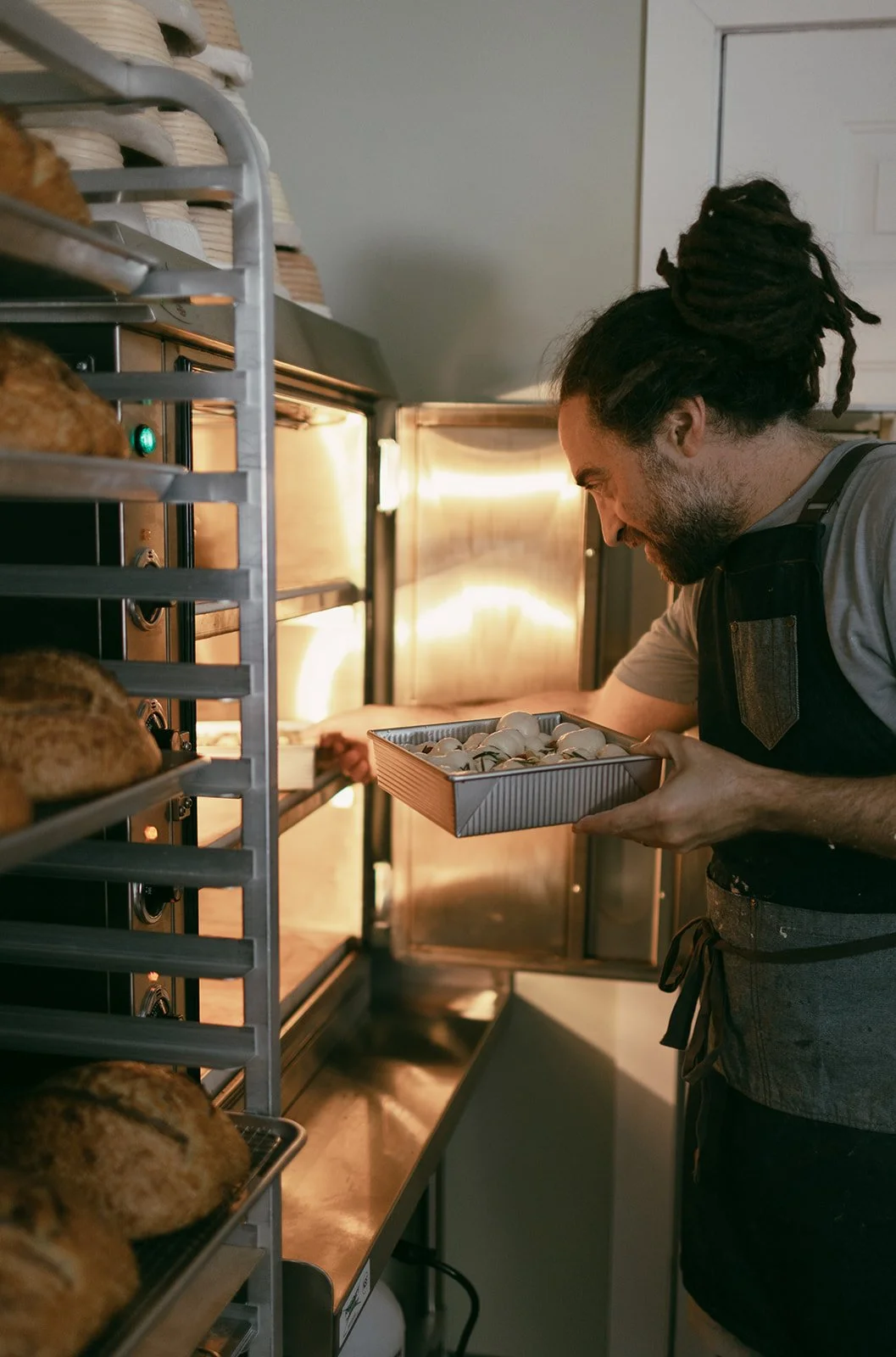
One of the things I also love about focaccia is that the fermentation schedule works differently than my classic sourdough loaves. With focaccia, the earlier part of the fermentation happens in the refrigerator, and the later part happens at room temperature. My classic loaves work in the opposite direction, with refrigeration happening later in the process. This difference actually allows me to maximize my production with limited refrigerator space and keep more dough moving through the bakery.
Beyond the process, focaccia is just a really fun bread to make. It’s incredibly versatile when it comes to toppings, which keeps things exciting and allows me to work with different seasonal ingredients and flavors. It gives me another creative outlet while still focusing on the same things I love about bread — fermentation, quality ingredients, and making something people enjoy sharing.
The only thing really limiting how much focaccia I can make right now is the number of pans I have. I use 8x8 USA pans, and I keep adding more as demand grows. I’m currently up to 50 pans and still counting, so clearly the focaccia operation continues to expand!
VSP: What are your top three taste/texture experiences with bread?
MK: This is a tough question because there are so many things I love about bread, but I think my top three would be:
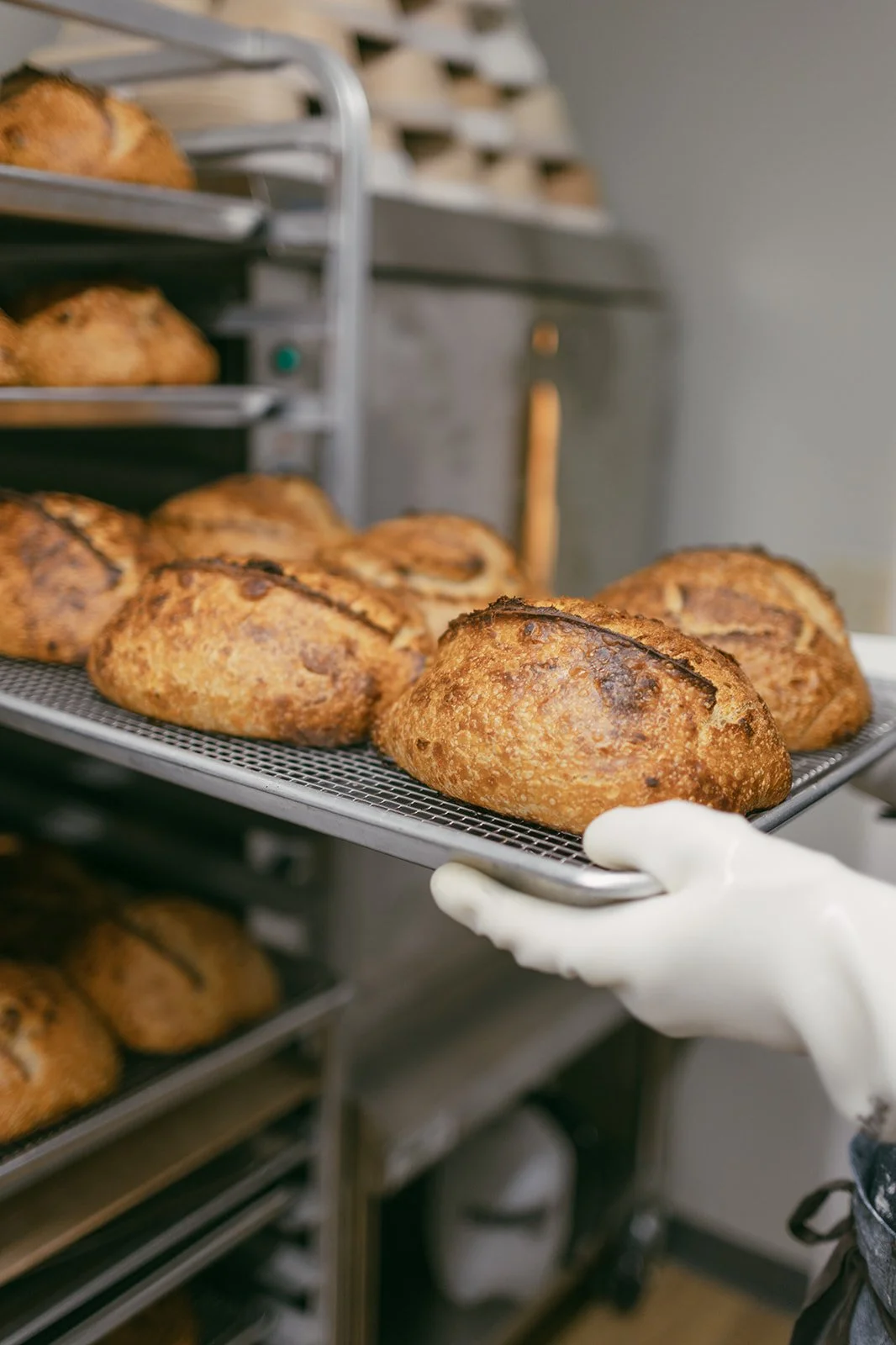
1. The first bite of a warm loaf with a perfectly crisp crust. There’s nothing quite like breaking into a fresh loaf and hearing that crackle from the crust. That contrast between the crunchy exterior and the soft, airy interior is one of my favorite parts of bread.
2. The flavor that comes from long fermentation. A well-fermented loaf has so much depth — a little tang, a little sweetness, and a complexity that you just can’t rush. It’s amazing how flour, water, salt, and time can create something with so much character.
3. The texture of a properly open crumb. Seeing those beautiful pockets of air inside a loaf is always exciting because it tells a story about the process — how the dough was mixed, fermented, shaped, and baked. But more importantly, it creates that perfect texture where the bread feels light but still has enough chew and substance.
At the end of the day, I think my favorite bread experiences are the simple ones: a slice of good bread with butter, shared with family or friends. Bread has this incredible ability to bring people together, and knowing that families are sitting at the table together eating my bread keeps me excited about making it.